
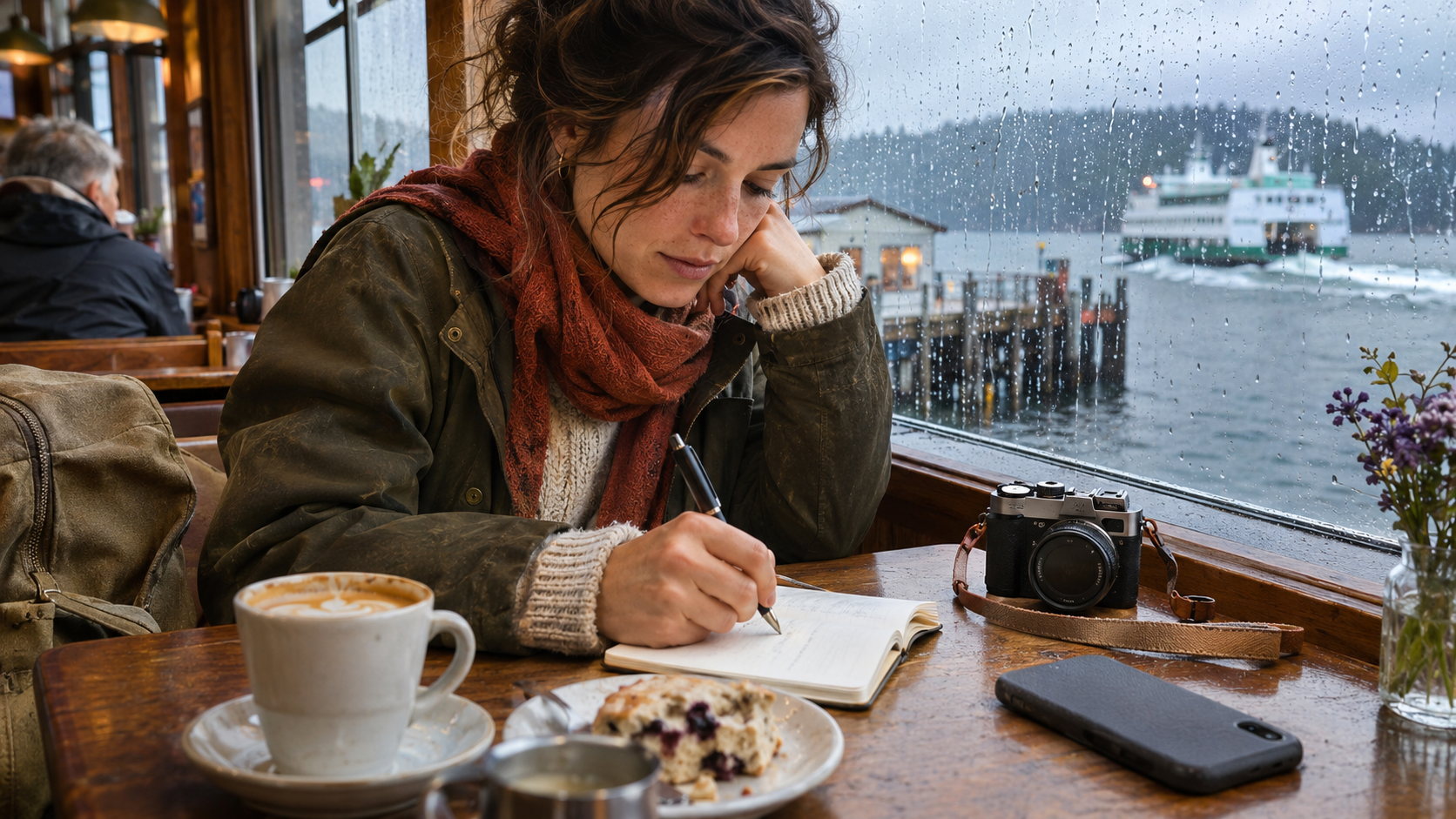
Your notebook says you missed the ferry. Your camera roll shows a ticket booth, a wet backpack, and a blurry boat pulling away. You paste those scraps into AI and ask it to make the story more vivid. Suddenly there’s a sympathetic deckhand, a conversation you never had, and a smell of diesel you don’t remember.
The paragraph reads well. That’s what makes it easy to miss what changed.
Travel writers can get more out of AI by giving it the editor’s chair, not the traveler’s. Let it ask what happened next, spot where a reader will get lost, or suggest a better order for scenes. Keep the observations, the judgments, and the final sentences yours.
Sort your scraps before you ask for a story
Label your notes by how you know what’s in them. A few categories are enough:
- Saw or did: I went to the ticket booth on the waterfront.
- Documented: My ticket and photo show the pier number.
- Remembered, not recorded: I think someone pointed uphill, but I don’t remember their exact words.
- Not checked: I don’t know whether this is the usual departure pier.
This takes less time than untangling a polished draft that treats every item as equally certain. It also gives you somewhere to look when an editor asks, “How do you know?” Keep identifying details and private material out of what you share, and don’t paste private conversations just to make a scene feel complete.
Ask for questions before you ask for prose
Say you have a fictional set of notes: the ferry was at Pier 4, the map pin took you to Pier 2, and the printed ticket had the correct pier all along. You think the story is about missing a boat. An editorial question might reveal it’s really about the moment you stopped consulting the map and looked at the ticket.
Ask the AI for three questions about what happened, not three ways to dramatize it. Which app or document sent you to Pier 2? What made you check the ticket? What did you do once you knew you wouldn’t make it? Answer only what you remember or can check. “I don’t know” is a useful answer. You can write around a gap more honestly than you can write through an invention.
Try a different order without changing the facts
Once you know what the story is about, ask for two outlines based on your notes. One might start with the wrong pier and follow the scene in order. The other might open on the correct pier number printed on the ticket, then work backward to explain why you missed it. Both use the same material; they promise the reader different things.
Draft the opening yourself. Then ask AI to mark the paragraph where the pace drops or a detail needs context. Ask it to explain why before suggesting a rewrite. For example, “The reader doesn’t yet know there are two piers” is actionable feedback. “Make it more evocative” is an invitation to add fog you never saw.
Check the line between a story and advice
“The ticket showed Pier 4 that afternoon” is a claim about your trip. “This ferry leaves from Pier 4” is a claim a reader might act on. Before turning a personal experience into practical advice, check the current operator information and be clear about what you verified. If you can’t confirm the berth, you can still share the lesson: check the pier on your ticket and confirm it with the operator if the map disagrees.
Make one final pass for invented dialogue, invented sensory detail, and sweeping claims about a place based on one encounter. Then read the piece out loud. Keep the phrases you’d actually use when telling a friend what happened, even if they’re less polished than the alternatives.
Your Copy-Paste Prompt
Work as my travel story editor, not my ghostwriter.

Reader: [who this is for]
What I think the story is about: [one sentence]
My notes: [label items OBSERVED, DOCUMENTED, REMEMBERED, or UNCHECKED]
My rough draft, if I have one: [paste it]

First ask up to three questions, one at a time, that would help me
recover a useful detail or find the turning point. Accept "I don't
know." Do not invent scenery, people, dialogue, motives, or events.

Then suggest two short outlines. For each, name the opening moment
and point to the notes that support it. Flag anything that would need
my memory, a record, or a current check with the operator.

If I've included a draft, identify up to three places where a reader
may lose the thread or mistake my experience for general advice.
Explain the issue before suggesting any edits. Don't rewrite in my
voice unless I ask. Never turn a paraphrase into a direct quote.
A good editor can help you see what was interesting about a missed ferry. Only you can say what happened while you stood on the pier.